A Real Talk Discussion about DLSS 5: 3 Good Things, 5 Bad Things, and 4 Questions For You

Brent_Justice

Administrator
Staff member
Joined
Apr 23, 2019
Messages
1,157
Reaction score
2,084
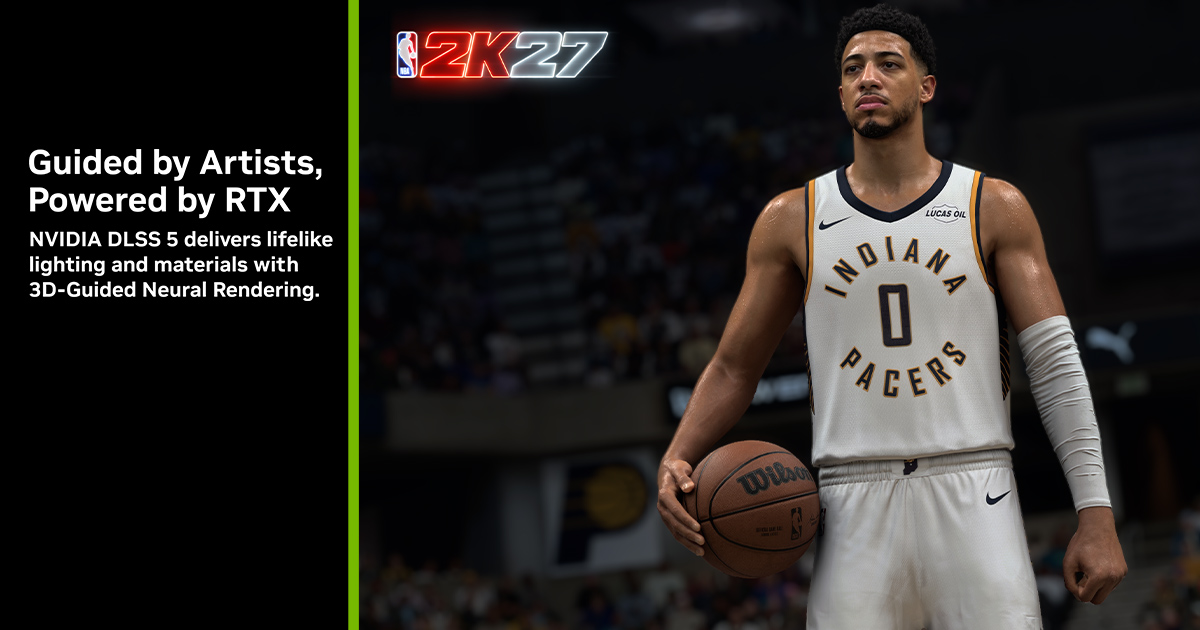
DLSS 5 3D-Guided Neural Rendering launched recently, with official support in NBA 2K27. There have been a lot of official performance reviews of DLSS 5, image quality reviews, and even modders adding unofficial support to a lot of games, showing off its IQ, performance, and capabilities. I (Brent Justice) have bided my time, taken in […]

See full article...
 
I agree with your salient points in the video. Match for match really. And honestly as a 5090 owner I won't be turning this on in my games until such time as the power draw issue is corrected by Nvidia.

One bit of feedback... it was pretty clear you were reading... practicing your cadence shifts. :) Just something to improve on!
 
I did have an outline of notes I wanted to discuss, but I wasn't reading a script or word for word, it was truly a free form of thoughts, I just had an outline of the numbered points so I could remember :p But feedback noted, I could make the transistions between topics smoother.

 
Totally agree that this seems like a cop out from publishers. They want quickly developed slop and want to pay less hours worked to artists. It's one thing to elevate a poorly developed game's visuals to make it more palatable but almost criminal for a AAA game to be developed from the start with the emphasis never being on the art because "DLSS 5 will take care of that". This will only make games look more and more similar and lead to higher chances of a game's art being dismissed, similar to how a lot of us are able to recognize AI use in a video and immediately get turned off. It's novel for a minute or two but then the brain goes, hey, this is some low quality crap because real human effort has not gone into making it unique. Blood and sweat matters. It always has. No **** silicon is going to make that go away unless of course entire generations of coming humans are fed on this slop. Then it will get normalized and real human artistry will die.

I am, however, totally behind the idea of RTX Remix and DLSS 5 for re-invigorating the visuals of older games. But as always, Nvidia is going to go the wrong way, just like it did with raytracing because it helps them in promising that the future will be better. Better for them only. All we've gotten so far is that most of us have been pushed out from ever being able to afford an 80 or 90 series GPU.
 
I think it's a bit premature to attempt to judge this technology after one game. Please, it's a sports game to boot.
The "holy grail" in gaming has and always will be graphical fidelity. First there was Ray Tracing and everyone boo-hoo'd it because it is/was too hard on the hardware.....three generations later, we're almost there.
Now the same thing is happening over neural rendering. I say bring it. Make the game beautiful. Go back and re-mix my old favorites while you're at it.....thank you. Maybe in a couple generations we'll be crying about some newer technology......if graphics cards still exist.....
 
I think to use NBA2K27 as the premier game for the tech is about as bad of a choice as it could be. The only worse choice would've been to put it in fortnite or minecraft first.

To be blunt NBA2K27 doesn't look impressive to me at all with DLSS5, maybe they choose it because of the limited scope, ie. it only needs to render one basketball court, but that's just a guess.

The performance is obviously an issue, but doesn't seem worse than when Ray Tracing was introduced on the 2xxx cards. I expect next gen to accelerate / handle this with much less of a performance hit. The question is whether there will be a next gen that we can buy.

The power draw is a 5090 issue, and it was a problem even before DLSS5, this just highlights it even more.

Q1: Is DLSS5 the only way to achieve better image quality?

The answer to this is obviously no, but it is no for any new technology. It is no for ray tracing, it is no for pixel shaders, it is no for HW T&L it is a no even for 3D accelerator cards. So I don't think this is a question worth asking. The question should be is it a good way to achieve better image quality. And based on the results I've seen in the games that I personally tried, my answer is a resounding yes.

Q1b: Why can't the changes be baked in to game assets?

I've talked about this in another topic but most of you seemed to miss my point. Some of it could be be baked in, like how it changes character models, but to me that is the least impressive aspect of DLSS5 and we shouldn't be focused only on that. The best part of DLSS5 is how it makes the entire scene look more natural in lighting and materials. You can't bake this into the game's assets because it is using the entire final rendered scene which changes dynamically.

To use a bad analogy, it's like asking the chef to bake in his secret recipe into the ingredients. The ingredients being the game assets, and the recipe DLSS5 neural rendering.

Q2: Game support

I think this has already been answered by modders, given how it took them 2 seconds to implement it into basically any game, even ones that doesn't support DLSS at all. Given that it needs so little effort to implement, I think the only obstacle in widespread official adoption is the principled stance against it that many seem to be taking.

Q3: How relevant / important it is to you.

When they first demoed it I was skeptical, but mostly because I never thought it would work at any reasonable quality or performance on anything but dual 5090s.

But now that I've tried it for myself and even on my 4080 I got almost playable frame rates, or in some cases playable framerates, in games that aren't even officially supported, I can say that I'm extremely excited for it. To me it seems to be the biggest leap towards photorealistic graphics since pixel shaders.

Q4: Will the good outweigh the bad

The instant I get playable frame rate it will. In some games where the gameplay doesn't necessitate high fps, it already does for me.
 
But now that I've tried it for myself and even on my 4080 I got almost playable frame rates, or in some cases playable framerates, in games that aren't even officially supported, I can say that I'm extremely excited for it.
Which games did you try it on? Which games seem to really benefit visually? What was the power draw like on your 4080?
 
Q1: Is DLSS5 the only way to achieve better image quality?

The answer to this is obviously no, but it is no for any new technology. It is no for ray tracing, it is no for pixel shaders, it is no for HW T&L it is a no even for 3D accelerator cards. So I don't think this is a question worth asking. The question should be is it a good way to achieve better image quality. And based on the results I've seen in the games that I personally tried, my answer is a resounding yes.

Q1b: Why can't the changes be baked in to game assets?

I've talked about this in another topic but most of you seemed to miss my point. Some of it could be be baked in, like how it changes character models, but to me that is the least impressive aspect of DLSS5 and we shouldn't be focused only on that. The best part of DLSS5 is how it makes the entire scene look more natural in lighting and materials. You can't bake this into the game's assets because it is using the entire final rendered scene which changes dynamically.

To use a bad analogy, it's like asking the chef to bake in his secret recipe into the ingredients. The ingredients being the game assets, and the recipe DLSS5 neural rendering.

Thank you for the very long feedback! I enjoy your opinions, and everyone chiming in on this topic.

I wanted to address specifically this one, just to clarify my opinion a bit more, which I didn't flesh out with enough detail in the video.

Specifically, in regards to the better rendering of lighting DLSS 5 is doing.

I am of the opinion that game developers could also improve lighting in their games, up to the level of DLSS 5, without the need for DLSS 5.

Path Tracing exists, better denoisers exist. With Path Tracing, plus work on the game engine side, developers do have full control over the lighting in their games. And they certainly have control over the assets and materials.

I think you CAN bake better lighting technologies and techniques (read: dynamic lighting) and materials in the game engine, and assets, the developer certainly can, without using DLSS 5. They can build systems that do this, they can use Path Tracing, all the things, the game developer can customize the lighting and certainly do what DLSS 5 is doing. The capability is there, lighting games, and dynamic lighting, is nothing new. Just my opinion :)
 
Which games did you try it on? Which games seem to really benefit visually? What was the power draw like on your 4080?
I only tried it on 4 games so far.
  • BeamNG: This impressed me the most, it almost makes this game seem photoreal. The paint on the cars, the plastic tail lights, look almost real. But the environment gets the biggest uplift especially on dense vegetation. The color of the lighting feels more natural, and the shadows are noticeably more realistic.
    ON:ON.jpg OFF: OFF.jpg

    The difference might look subtle at first, but it's night and day difference. The oversaturated plastic look of the vegetation turns into natural colors. The harsh shadows are replaced with more smooth shadows. And this is just a still image, it looks better in motion since it is using motion vectors as well. The FPS cost in this game as you can see is about 40% goes from 50 to 30.

  • Train Sim World 6: This is a similar outdoors type of graphics so the results in this were also impressive. The difference is that the environment in this game is often very lazily made and lacks details. And neural rendering can't really hide that, it won't make up objects where there is none. So the fears that developers might just make placeholder graphics and slap dlss5 on it seem unfounded. if it's a turd DLSS5 only makes it a shiny turd. But the materials of the trains and the overall scene lighting is still greatly improved.

  • Resident Evil 3 remake: This is a DX11 game, the above two were at least DX12, even if without official DLSS support. So this had some issues with DLSS5, there were some graphical anomalies like ghosting, but the character models look really good with it still. And the performance didn't bother me at all with this one. I didn't bother turning off HDR so the screenshots don't look right color wise.
    re3_2026_09_02_22_14_25_728.jpg

  • Cyberpunk 2077: Ironically this looked least impressive to me at first glance, but I really haven't played around with the settings enough to give a final verdict.

I couldn't really make up my mind what else to try it on yet. I'll probably check out one of the tomb raider games, but those aren't installed at the moment.

I wasn't paying close attention to power draw, so I don't know if it increases when turning it on or no.
 
I think you CAN bake better lighting technologies and techniques (read: dynamic lighting) and materials in the game engine, and assets, the developer certainly can, without using DLSS 5. They can build systems that do this, they can use Path Tracing, all the things, the game developer can customize the lighting and certainly do what DLSS 5 is doing. The capability is there, lighting games, and dynamic lighting, is nothing new. Just my opinion
I have no doubt you could achieve similar graphics fidelity with conventional means, but I think the performance hit would be the same if not greater if you tried to match it in detail. And how much more man-hours would you need to put into it? While DLSS5 is basically free as far as dev time.

Maybe if all developers were John Carmacks then there would be no need for DLSS5, but the talents of most now seems to be limited to using UE5 and often poorly.
 
Become a Patron!
Back
Top