AMD Ryzen 7 9850X3D CPU Review: Fastest 8-Core

Brent_Justice

Administrator
Staff member
Joined
Apr 23, 2019
Messages
1,075
Reaction score
1,963
Introduction The AMD Ryzen 7 9850X3D was announced at CES 2026, and now it is launching with availability on January 29th, 2026, with an MSRP of $499. The AMD Ryzen 7 9850X3D is AMD’s top-end single-CCD spec with 3D V-Cache with the intent to directly provide the best gaming experience, and is marketed as a […]

See full article...
 
That is an impressive 8 core single CCD CPU. Very nice...

Would be neat to see what a single CCD 12 core 3dvcache CPU would be awesome. :)
 
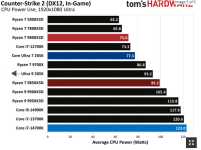
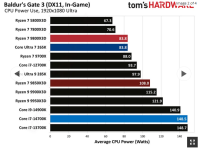
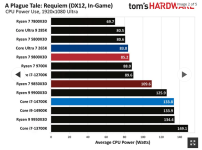
This is the only review showing less power use vs the 9800x3d, all other tests show the 9850x3d consuming more power.1000028804.png1000028803.png1000028802.png

 
This is the only review showing less power use vs the 9800x3d, all other tests show the 9850x3d consuming more power.
Brent can probably speak to this better, but there's a ton of variables that go into power consumption - including the game, the game resolution and game settings that are selected for testing. We don't typically do far ranging power analysis - Toms, for example, seems to be running all their standard tests through benchlab which makes it easy to pull together a ton of power graphs that correlate to the benchmarks run. Our power testing tends to focus on games.

There can also be differences in where the power is measured - benchlab (which they used on the power testing page) is an external to the system pass through that doesn't directly measure CPU usage, whereas we're pulling our power measurements from HWiNFO64. Though, really, I can't tell what method they used to measure CPU power usage in their gaming benchmarks as it's not disclosed....
 
As stated in the review: "
This is the only review showing less power use vs the 9800x3d, all other tests show the 9850x3d consuming more power.View attachment 4358View attachment 4359View attachment 4360

As stated in the review: "On this page, we are going to test the power draw on the CPUs, testing multi-core performance in Cinbench 2026 running for 15 minutes."

The method I used (and always have used) is a simple Cinebench Multi-Core, full-load, power test. I run Cinebench on the multi-core benchmark for at least 15 minutes, looping. I have HWiNFO up on the screen, and monitor the "Package Power" reported. I then graph the maximum or peak power number represented.

I do not claim that this is a thorough or detailed power test. It is meant to verify or validate all-core power loads and report on the quoted or rated TDP from AMD and Intel. I am aware that TDP is the thermal design power recommendation for cooling.

I do claim this is a valid measurement, and a real-world use-case scenerio that an end user would realistically encounter in real-world usage. For example, if you are editing and encoding or transcoding video in a video editor, or running 3D renders, or anything that pushes all cores to the max, this is the power you would experience in a real-world use case.

This is different than testing power while gaming. This is not showing power while gaming. I have done that in the past, on certain CPUs, but this was not that. You will note that Tom's testing was in games, which has a very different load than what I was doing. I was using productivity-based testing.

In addition, I am aware there are more accurate ways to capture power usage, but our reviews don't focus on that aspect. This method shows the 'cap' that the motherboard BIOS sets for package power. We can see that power is above the "TDP" number they provide, and we can see where it caps out with this method. I encourage you to look at other reviews for more detailed power testing and analysis.

I hope that helps.

 
One thing I'll also add to my statement: Testing power while gaming will be very different from all-core full-load testing because, while gaming, the CPU cores will boost to higher frequencies and voltages, since less of them are being used, and the workloads are lighter. Therefore, the peak power registered on such things as the EPS rails will be higher and peak higher than pushing all-cores to full-load at the same time. When doing that, the clock frequency and voltages are lower, and thus it peaks lower overall.
 
Become a Patron!
Back
Top